
Franklin City Directory Collections
Williamson County Public Library confirms that historical directories are part of its non-circulating Special Collections. The documented online material does not identify a complete Franklin publisher list, year run, volume number, or sample listing. That matters. A shelf mention is a strong lead, but it is not evidence for claiming that every year, a particular reverse directory, or a named publisher is available. Ask staff to identify the volume and access conditions before recording a household or address from it.
| Collection | Years | Where Held | Access |
|---|---|---|---|
| WCPL directory shelves | Exact Franklin run not located online | Special Collections, Franklin | Non-circulating shelves; staff follow-up |
| Archives general index | 1799-present, by series | Williamson County Archives | Free online index; Reading Room follow-up |
| Archives marriage and obituary leads | Marriages 1803-1987; obituaries chiefly 1841-2026 | Williamson County Archives | Online reference, then underlying record |
| Historical Society journals | 1970 onward | Williamson County Historical Society | Searchable PDFs and master index |
The Tennessee State Library and Archives city-directory holdings page is a useful comparison point, but the research did not locate a complete Franklin run there either. Keep a gap in the research notes rather than filling it with a guessed year, publisher, or address entry.
Franklin City Directory Shelf at WCPL
Williamson County Public Library Special Collections is at 1314 Columbia Avenue in Franklin. Its listed phone is 615-595-1246, press 1. The collection is non-circulating, which means directories and related materials remain available for study in the library rather than checkout. Listed hours are Tuesday, Wednesday, and Friday from 9:30 to 5:30, Thursday from noon to 8:00, and Saturday from 9:30 to 5:30. It is closed Sunday and Monday. Call ahead because schedules and access arrangements can change.
The Special Collections listing places directories beside local newspapers, Bible records, cemetery and burial material, marriages, military records, tax records, historic court material, yearbooks, and periodicals. It also names county-newspaper, will, inventory, WPA, and court microfilm. Those companion sources can test whether a directory address is a residence, a business connection, or an incomplete lead.
WCPL Digital Resources adds local genealogy and local-history databases, searchable obituaries, and other family-history leads. Ancestry Library is listed for library use, while Fold3 and HeritageQuest are available through library-card access. These databases can locate a date, surname spelling, obituary, or newspaper lead, but the printed city-directory volume and its page remain the evidence for the address snapshot.
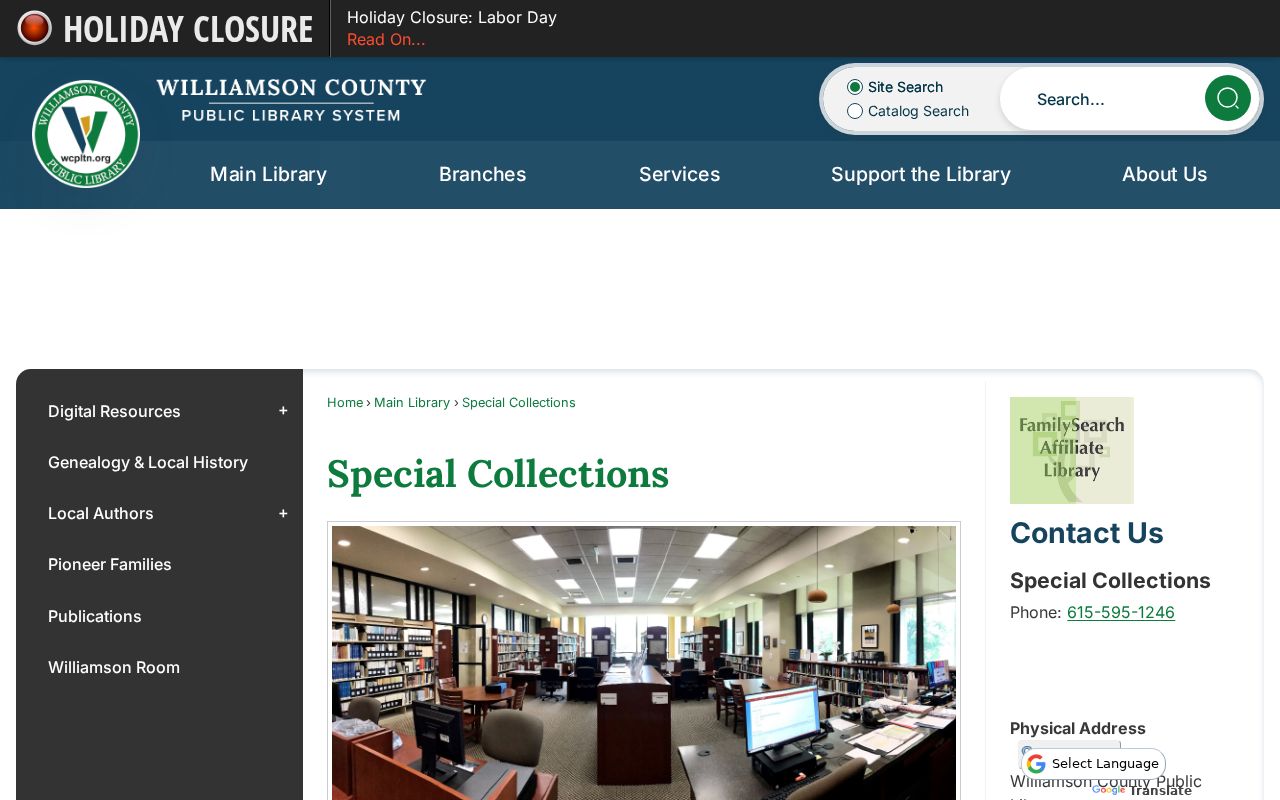
The library view reinforces a practical limit: the catalog-level confirmation identifies a holding category, while the physical volume supplies the exact year, page, and printed wording needed for a sound citation.
Research tip. Photograph or transcribe the volume title page and the page containing the printed abbreviation key before relying on a Franklin directory listing.
Franklin Directory Coverage Gap
A directory is not automatically a continuous annual series. For Franklin, the publicly inspected research confirms the library holding but leaves the exact year and publisher coverage unresolved. The responsible question for staff is narrow: which Franklin volumes are present, what dates do they cover, is there an address-first or criss-cross section, and may a researcher copy or photograph a page? Record the response with the volume title instead of assuming a neighboring city or a statewide web page fills the gap.
Missing online images do not mean the records are missing. The county Archives index alone contains more than 405,000 entries, but many results point to a bound book, loose file, or microfilm rather than an online image. The same principle applies to a directory shelf. Use the available finding aid, then follow the holding institution's rules for the actual item.
Note: Exact Franklin city-directory years, publishers, and a sample resident entry remain unverified until a volume is inspected or confirmed by Special Collections staff.
Reading a Franklin Directory Entry
Once an actual volume is open, treat every line as a dated transcription. The research does not support a generic Franklin sample entry or a claim about its abbreviations, so do not import conventions from another city's directory. Instead, capture exactly what the chosen book prints. A name may be a household contact, a business person, or another indexed party. An address can be a residence or a business location. A printed occupation or qualifier is evidence only for that edition.
| Volume identity | Title, publisher, year, and the page or column where the listing appears. |
|---|---|
| Name as printed | Full spelling, initials, suffixes, and any household or business wording. |
| Address as printed | Street number, street spelling, unit, rural-route or post-office form without silent modernization. |
| Printed qualifiers | Occupation, business, spouse, status, or abbreviation only if the book actually supplies it. |
| Cross-check note | Related deed, tax, obituary, newspaper, probate, or archive reference and its date. |
- Criss-cross directory
- An address-first arrangement that may list entries by street rather than by surname. Confirm that the specific Franklin volume includes one.
- Householder index
- An index arranged around a household or address. It can help locate a printed listing, but it does not prove every person in a home.
- Abbreviation key
- The volume's own explanation of shortened labels and marks. It should be copied from that book, not assumed from another edition.
Franklin Archives After a Directory
The Williamson County Archives search is the historical backstop when a directory name or address needs proof. Its Name Search, Keyword Search, and Field Search modes can narrow the record group before a visit. A result may identify a name, date, and reference to a book, reel, or file. Preserve that reference first, then contact the Reading Room at 611 West Main Street for the underlying item.
Archives series can add a date and relationship to a thin directory line. The site index identifies deeds, court material, marriages, probate, wills, burials, obituaries, tax entries, roads, licenses, and chattel mortgages across varying spans. For example, an address change may be tested against a deed or tax clue, while a disappearance from a directory can be checked against an obituary, probate file, or newspaper notice. Modern deeds and marriages belong with the Register of Deeds and County Clerk rather than the Archives.
The online index is a finding aid, not a promise of a downloadable image. Ask for the cited record group, volume, reel, or loose file, and note whether staff identifies an original, a bound book, microfilm, or a scan.
Franklin Records for Black Family History
Franklin family research benefits from collections built around people who may be faintly represented in conventional directories. WCPL's Thelma Battle African-American collection includes thousands of photographs and more than 2,000 funeral programs, with an online index. The Richard Carlton Fulcher material excerpts court records and documents concerning people of African descent from 1799 to emancipation. These sources can supply names, relationships, dates, and leads for a later records search.
The Edythe Rucker Whitley collection has more than 2,300 notebooks, with more than half arranged by surname. Compiled notebooks and funeral programs are valuable leads, not a substitute for an original deed, certificate, church record, court record, or cemetery entry. Compare spelling, place, and date before connecting a person to an address. A shared surname alone is not enough.
For a Black Franklin household, pair these collections with the Archives, church registers, cemetery material, obituaries, court references, and Tennessee statewide guides. That layered approach respects both the strengths and the gaps in every source.
Franklin Directory Context Leads
The Williamson County Historical Society journal archive provides searchable PDFs and a master index for journals from 1970 onward. A journal article may explain a neighborhood, church, cemetery, historic building, or family connection found beside a directory name. Preserve the author, journal date, and page, then seek a primary county or archival record for the underlying claim.
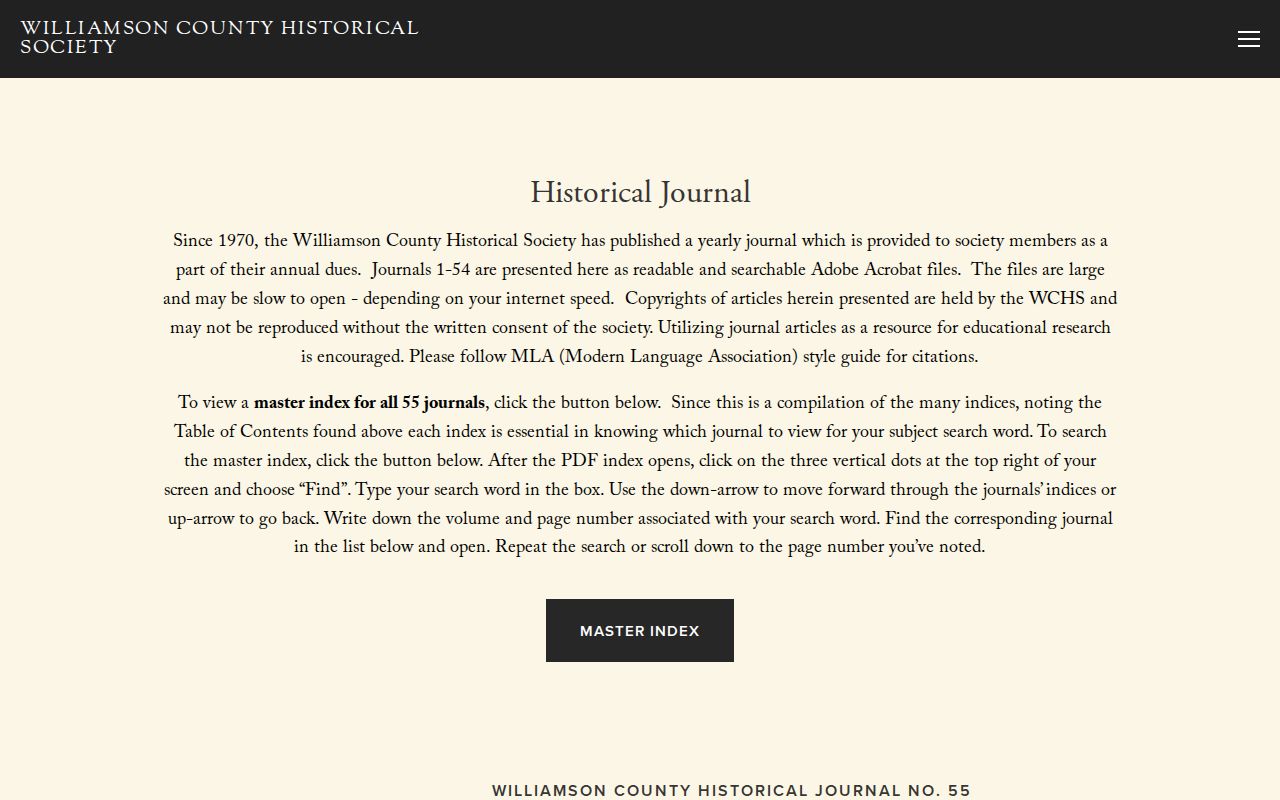
The journal archive is a context source, not a replacement for the dated directory volume. It can make an old place label understandable, especially around downtown, Natchez Street, churches, cemeteries, Civil War sites, or the Harpeth corridor.
Franklin's geography changed as rural routes, subdivisions, and municipal growth altered how places were described. Keep the label as printed in the historical item. Add a modern address or parcel crosswalk only after a deed, plat, GIS record, or reliable local-history source supports it.
Trace a Franklin Directory Household
A directory sequence can show when a name or address first appears, changes, or disappears, but it cannot settle ownership or current occupancy by itself. Build a dated trail. Start with one inspected volume, then move outward through nearby editions and independent county sources. If no second directory year is available, say so clearly rather than turning one snapshot into a timeline.
- Record the volume title, year, page, exact name spelling, and address exactly as printed.
- Check another confirmed directory year, if available, for a move, changed spelling, or altered household wording.
- Search the Archives index for a dated deed, tax, marriage, probate, obituary, burial, or court reference tied to the same person or place.
- Use newspaper, cemetery, church, or local-history material to test a move, death, kinship, or neighborhood clue.
- Keep ownership, occupancy, and correspondence evidence in separate notes. They answer different questions.
A person absent from a later directory might have moved, died, changed a printed name, fallen outside the coverage of that volume, or simply not been listed. A dated obituary, deed, probate record, or county index reference can distinguish possibilities. The strongest Franklin directory conclusion names the volume and date, then identifies the independent record that supports it.